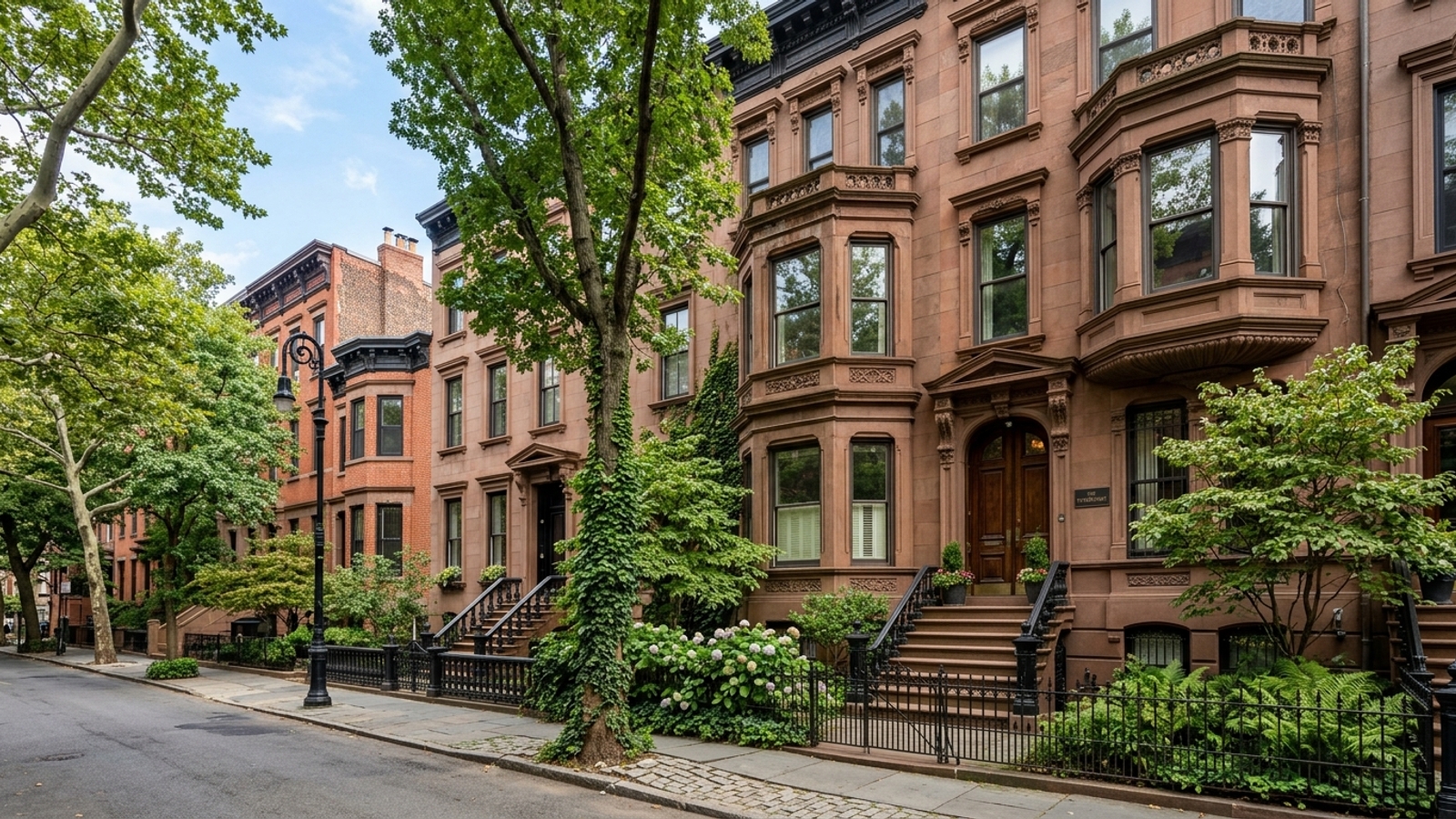
The Brooklyn Heights real estate market moves at its own pace compared to the rest of Kings County. Known for its 1800s brownstones and direct views of Lower Manhattan from the Brooklyn Heights Promenade, the 11201 ZIP code commands some of the highest property values in the borough.
Purchasing property here involves more than finding an appealing listing. Buyers face specific financial thresholds, complex co-op board approvals, and local tax structures unique to New York. The sooner you understand those details, the better you’ll focus your search.
Preparing for the Brooklyn Heights Market
Inventory in this historic landmark district stays tight. Recent market data shows just 45 active listings – roughly 2.2 months of supply. That’s not a lot of room to deliberate, which means you’ll want financing fully secured before you start touring.
The neighborhood draws a mix of primary residents and buyers looking for a secondary home close to Manhattan. With an average household size of 1.9 people, demand runs steady for both spacious single-family townhouses and smaller co-op units.
Evaluating Your Timeline
The median days on market recently clocked in at 35, and nearly 38% of homes sold above list price. Well-priced units move faster than that median suggests.
If you’re financing, build extra time into your schedule. Co-op purchases add even more weeks on top – board packages take time to assemble, and then you wait for the interview.
Current Real Estate Prices and Trends
The median sale price in Brooklyn Heights sits at roughly $1.94 million. That number blends everything from smaller apartments to multi-million-dollar brownstones, so treat it as a starting point rather than a ceiling or a floor.
Some estimates place the average home value around $1.52 million, and the median price per square foot recently hit $1,808. Neither figure tells the whole story on its own.
Understanding the Price Range
Co-op apartments are generally the entry point here – lower purchase prices, but strict financial requirements attached. On the other end of the spectrum, single-family homes can reach median prices as high as $6.5 million.
Know where you sit in that range before you start touring. It’ll save everyone time.
Property Types in the Neighborhood
Brooklyn Heights was the first neighborhood in New York City designated as a historic landmark district. That designation preserves the exterior architecture of the 1800s brownstones that define the streetscape, which is part of what makes this place what it is – and part of what limits your renovation options.
Beyond the classic townhouses, the local inventory is heavily weighted toward cooperative apartments, with a smaller selection of condominiums mixed in. Co-ops make up a large portion of what you’ll see on the market.
Co-ops vs. Condos
When you buy a co-op, you’re purchasing shares in a corporation rather than real property. You’ll need to pass a board interview, and most boards want to see post-closing liquidity equal to one or two years of maintenance fees.
Condos sidestep most of that. Fewer restrictions on subletting, fewer financing hurdles, easier to resell. That simplicity carries a price premium over comparable co-op units – you’re paying for the flexibility.
Notable Streets and Blocks to Consider
Values shift depending on exactly where you land within the neighborhood. Streets closer to the Brooklyn Heights Promenade and Brooklyn Bridge Park tend to see stronger demand and higher prices. Architectural consistency varies block to block too – some streets have uninterrupted rows of historic facades, others don’t.
Walk the neighborhood at different times of day. Traffic patterns and transit access can feel very different at 8 a.m. than they do on a Sunday afternoon.
The Premium Pockets
The most expensive blocks in Brooklyn – arguably among the priciest in the entire borough – are bounded by Joralemon Street, State Street, Willow Place, and Hicks Street. The median sale price in that specific pocket has reached $3.12 million.
Individual sales there frequently clear the neighborhood median by a wide margin. A single-family home on Willow Place previously sold for $3.92 million, which gives you a sense of the ceiling in that stretch.
Location, Commutes, and Transit Access
Brooklyn Heights sits in Kings County, directly across the East River from Lower Manhattan. That proximity is real and practical, not just a marketing line – daily commuters into the city don’t have far to go.
The neighborhood has dense subway access connecting to multiple major lines. Most daily errands don’t require a car.
Airport and Highway Access
John F. Kennedy International Airport runs about 14 miles away – roughly 24 to 38 minutes by car, depending on conditions on the Brooklyn-Queens Expressway.
LaGuardia Airport is closer at approximately 10 miles. Figure 16 to 26 minutes in standard traffic.
Cost of Living and Local Demographics
Brooklyn as a whole runs about 65% higher than the national average on cost of living. Brooklyn Heights sits among the highest-earning pockets within the borough.
Recent census data puts the median household income here at $173,136 – 98th percentile nationally. The average annual household income is $219,936.
Neighborhood Composition
Brooklyn Heights has the smallest average household size in the borough at 1.9 people. The mix of primary residents and buyers seeking a secondary home close to Manhattan keeps demand relatively consistent.
High everyday expenses are part of the picture here, from groceries to property taxes. And because co-op boards tend to enforce strict financial requirements, the people living in these buildings generally carry substantial cash reserves. That’s just the environment you’re entering.
How to Choose a Local Real Estate Agent
You need someone who actually knows the 11201 ZIP code – the specific building rules, the board dynamics, the blocks where inventory rarely surfaces. A general Brooklyn agent can get you into trouble here without meaning to.
Typical commission rates in the New York City area run around 5% to 6% of the sale price, generally split between the listing agent and the buyer’s agent.
Finding the Right Fit
Interview more than one agent. Ask directly about their recent transaction history in the neighborhood, and ask specifically about their experience assembling co-op board packages. That process demands real attention to detail, and you’ll know quickly whether someone has done it before or is figuring it out alongside you.
The best real estate agent in Brooklyn Heights will also have working relationships with real estate attorneys. In New York, attorneys handle contract drafting and review – they’re not optional, they’re part of your team.
The Purchase Process in New York
The buying process here has a few steps you won’t find in most other markets. After you have an accepted offer, your attorney reviews the building’s financial statements before you sign anything binding. Don’t skip that step.
Closing costs add up fast beyond the down payment – typically several percent of the total purchase price. Plan for that from the start.
The Mansion Tax
New York State charges a mansion tax on residential purchases of $1 million or more. The rate starts at 1% and scales up to 3.9% for the highest tiers in the city.
At a median sale price of $1.94 million, most Brooklyn Heights buyers will owe this tax. It’s a mandatory cash expense, so build it into your budget before you fall in love with a listing.
Frequently Asked Questions
Is Brooklyn Heights, NY a good place to live?
Yes. It offers proximity to Manhattan, dense subway access, and direct views of the city from the Brooklyn Heights Promenade. The area is known for its historic 1800s brownstones and Brooklyn Bridge Park.
Is Brooklyn Heights, NY an expensive place to live?
Yes. Brooklyn overall has a cost of living roughly 65% higher than the national average. The neighborhood’s median household income is $173,136, and the median home sale price sits around $1.94 million.
What types of homes and properties are for sale in Brooklyn Heights, NY?
The inventory primarily consists of cooperative apartments, condominiums, and historic 1800s brownstones. Co-ops represent the most common entry-level option, while single-family townhouses represent the highest price tier.
What are the financial requirements for buying a co-op in Brooklyn Heights?
It depends on the specific building’s board. Most co-op boards require buyers to demonstrate substantial post-closing liquidity, often equal to one or two years of maintenance fees, alongside strict debt-to-income limits.
How long does the home-buying process typically take in Brooklyn Heights?
Homes recently spent a median of 35 days on the market before going under contract. Closing timelines vary, but co-op purchases require additional weeks for board package assembly and interviews.
How much do real estate agent commissions cost in Brooklyn Heights?
Typical commission rates in the New York City area run around 5% to 6% of the final sale price. This total is generally split between the listing agent and the buyer’s agent.
How do I find the best real estate agent in Brooklyn Heights?
Interview local agents with specific experience in the 11201 ZIP code. Look for professionals who have successfully handled co-op board approvals and understand the historic district’s specific building requirements.
Connect With Us
Keep up to date with the latest market trends and opportunities in New York

![[banner_image_alt]](https://cdn.agentimagehosting.com/wVjB1yX7sydMzW0pc4fgF/2026/04/29150944/FAR_2719-Web.jpg)