

The median sale price for homes in Brooklyn Heights, NY, currently sits at around $1,811,992. For buyers looking to park capital in one of New York City’s most established neighborhoods, the appeal isn’t hard to see, but earning a return here requires a close reading of local regulations.
If you plan to rent out a unit, hold a property for long-term stability, or renovate a historic rowhouse, the rules dictate your options. Co-op sublet limits, strict short-term rental laws, and landmark permits all shape what’s possible. Investing in Brooklyn Heights comes down to matching your financial goals with the property types and city codes that govern them.
Key Takeaway
Brooklyn Heights is a place to hold capital for the long run, not to chase quick gains, as condo prices, which drive about nine in ten sales here, were flat year over year. If you plan to rent the unit, start with a condo whose bylaws allow leasing, because co-op sublet limits and New York City’s short-term rental laws rule out many investment plans. A townhouse with a legal rental unit is the alternative if you can wait for scarce supply.
Who This Guide Is For
You are weighing whether to put investment money into a Brooklyn Heights property and deciding which type of home, and which rental plan, the local rules will let you carry out.
Is Brooklyn Heights a Good Place to Invest in Real Estate?
The median sale price for all homes in Brooklyn Heights rose 4.5% year over year, but that figure is a mix effect rather than a sign of rapid appreciation. Condos made up 62 of the 69 sales in the 90 days ending September 30, 2026, and their median price was flat over the same period. Both property types sold at the exact same $1,538 per square foot, meaning the higher blended price for all homes reflects larger properties changing hands, not rising baseline values.
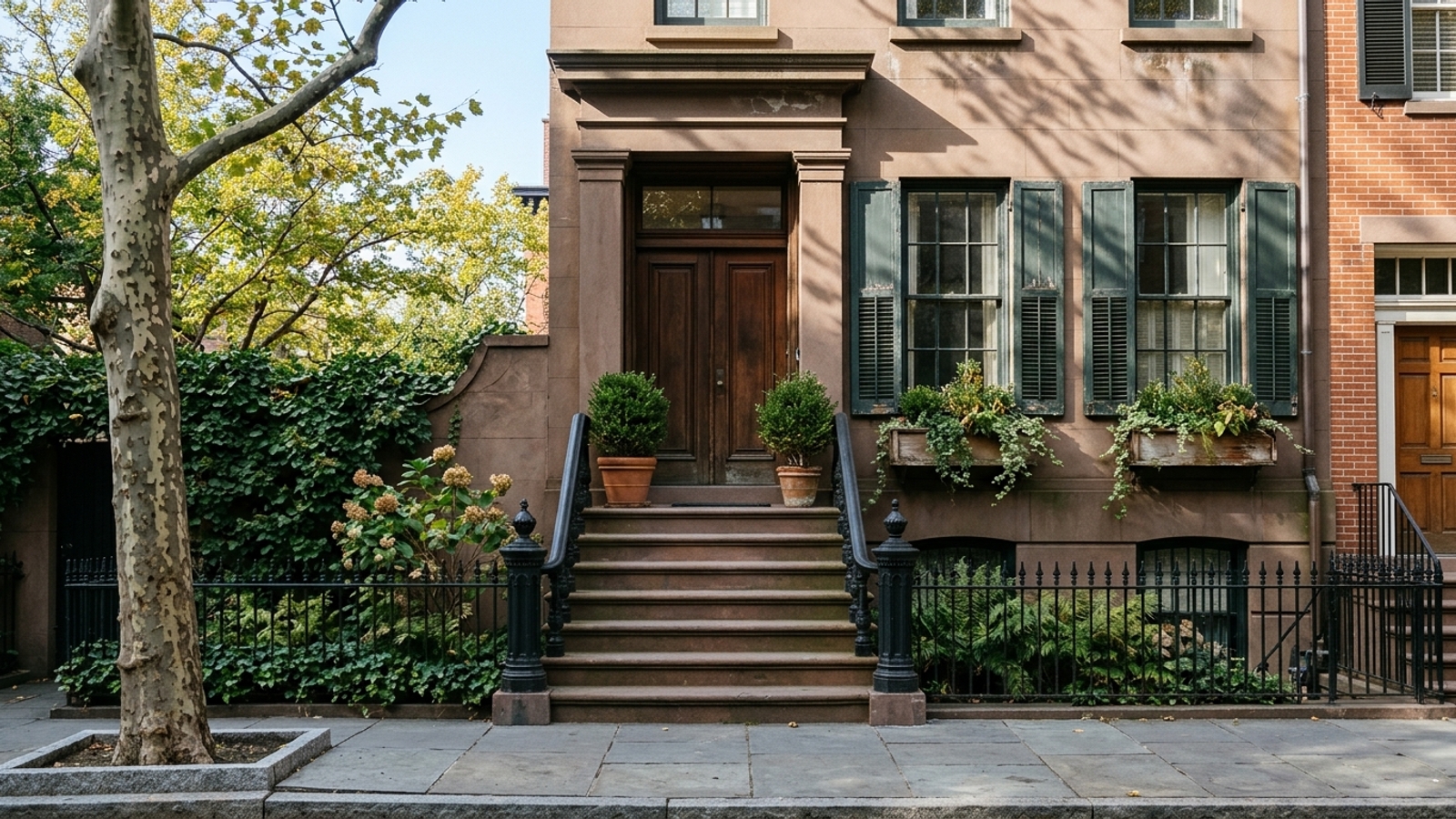
An investor here is buying a stable, full-price asset suited to a long hold or steady rental income. The returns depend entirely on what local rules let you do with the property. Co-op sublet restrictions, citywide short-term rental laws, and landmark permits act as hard boundaries on your investment plan. You can read more about the pros and cons of living in Brooklyn Heights to see the landmarked rowhouse streets and the Promenade that keep demand steady.
The trade-offs center on stability versus growth, condo flexibility versus co-op control, and rental income versus strict city rules. Buyers wanting a broader view of price history should review the Brooklyn Heights housing market page rather than expecting near-term spikes.
Brooklyn Heights Housing Market Data Investors Should Read
The neighborhood currently holds 2.6 months of condo supply, which means sellers hold the edge in negotiations. About 40.7% of condos recently sold above their list price, so the best units still draw competition. The 100.2% median sale-to-list ratio tells you that those overbids are small. Budget to pay at or very close to asking rather than expecting a steep discount or bracing for a runaway bidding war.
The median time on market is 35 days. Listings that have sat past that mark are where sellers are more likely to move on price and where negotiations typically open up.
For a detailed look at monthly trends, see the housing market page, and review the buying in Brooklyn Heights guide for the steps to close a deal.
Condo, Co-Op or Townhouse: Choosing a Property Type to Invest In
Each property type comes with its own set of rules, and those rules will shape your investment plan more than the purchase price will.
Condos
Condos dominate local sales and inventory. They’re generally more open to leasing, which fits most long-term rental plans. You still need to check the building’s bylaws for minimum lease terms, the board’s right of first refusal, and any caps on the total number of rentals allowed at one time. Monthly common charges eat directly into your gross yield, so ask the managing agent for the exact current figure before running your numbers.
Co-Ops
Co-ops place much tighter controls on what you can do with the unit. The board must approve all buyers and any future sublets. Many co-op boards limit subletting by duration or frequency, such as allowing rentals for only two out of every five years, and some charge a flip tax when you eventually sell. Ask for the proprietary lease and house rules to confirm these details, and verify whether a listing is a condo or a co-op, as automated data feeds sometimes blend them together. A strict board can make a rental plan impossible regardless of the purchase price.
Townhouses
Townhouses offer a different path. A legal rental unit on the property can offset carrying costs, but check the certificate of occupancy on New York City Department of Buildings records to confirm the legal unit count before banking on that income. Supply is thin: recently, 13 of the 66 active listings were non-condos, and only seven non-condo sales closed in a 90-day period. That’s a small sample, and it points to a longer wait for the right property.
All three property types end up in the same per-square-foot price band. The choice among them comes down to the rules you can live with and how you plan to use the space.
Renting Out a Brooklyn Heights Property
If you plan to lease the property long-term, check current median asking rents for the specific bedroom count you want to buy. To run a gross-yield check, divide the expected annual rent by the purchase price, and compare that against the condo median price in the At a glance section below. At these price levels, gross yields are modest, which reinforces why buyers treat this area as a hold-for-stability market rather than a high-yield cash flow play. Since transit access drives tenant demand, the getting around Brooklyn Heights page covers the local subway lines.
Tenant regulations in New York dictate how you manage the property. Under New York’s Good Cause Eviction Law, a small landlord, defined in New York City as one who owns a total of 10 or fewer housing units in the state, is exempt from the law’s protections. Separately, under the rent stabilization system amended by the 2019 Housing Stability and Tenant Protection Act, apartments in city buildings with six or more units built before 1974 are generally subject to rent stabilization. Once a unit becomes rent-stabilized, it can no longer exit the system due to high rent. Ask a New York real estate attorney to review your specific rental plan.
Short-term rentals are a different matter entirely. Local Law 18 of 2022 requires short-term rental hosts to register with the Mayor’s Office of Special Enforcement. Registration is conditioned on following existing rules that prohibit renting an entire apartment for fewer than 30 days, limit short-term rentals to units where the host resides, and allow no more than two guests at a time. The city enforces compliance through inspections and civil penalties ranging from $100 to $5,000 per violation, and booking platforms must block transactions for unregistered listings. Buying a whole unit solely for an Airbnb investment is effectively off the table.
What It Costs to Buy and Hold an Investment Property in Brooklyn Heights
Buying in New York City means several layers of upfront taxes before you collect a dollar of rent. Understand each one before you model your returns.
The New York State mansion tax applies to residential sales of $1 million or more, paid by the buyer at closing on the entire purchase price. The widely reported tiers start at 1.00% for sales between $1,000,000 and $1,999,999, scaling up to 3.90% for sales of $25 million and above. Separately, the seller customarily pays the NYC Real Property Transfer Tax, which is 1.425% for sales above that threshold, and the New York State Real Estate Transfer Tax, which sits at 0.65% for city residential sales of $3 million or more. The notable exception is new-development sponsor sales, where the buyer customarily pays these transfer taxes.
The NYC Mortgage Recording Tax applies to financed condos and one- to three-family houses. The effective buyer rate is 1.8% for loans under $500,000 and 1.925% for loans at or above that amount. Co-op purchases are entirely exempt from this tax because a co-op loan is secured by stock shares and a proprietary lease, which is personal property, not a recorded mortgage on real property. Condo buyers can sometimes use a Consolidation, Extension, and Modification Agreement to reduce this tax by applying it only to new money advanced, but co-op buyers pay no mortgage recording tax to begin with.
Holding costs include property taxes, which the NYC Department of Finance calculates differently based on property type. For fiscal year 2025, Class 1 properties, which include one- to three-family homes, were taxed at 20.085% on an assessment of 6% of market value. Class 2 properties, covering co-ops and condos, were taxed at 12.267% on an assessment of 45% of market value. Look up the property’s current tax bill on the Department of Finance property lookup to confirm the exact amount. You’ll also need to ask the managing agent for current common charges or maintenance fees and get insurance quotes. For broader household budget figures, see the cost of living in Brooklyn Heights and utilities pages.
Buying a Condo at the Brooklyn Heights Median: Cost Breakdown
To see how these costs stack up, look at a hypothetical purchase of a condo at the recent $1,400,000 median sale price. At this price, the buyer pays a 1% mansion tax at closing, which equals $14,000. Finance $1,000,000 of that purchase, and the 1.925% NYC Mortgage Recording Tax adds another $19,250 to your closing costs. For illustration only, those two taxes alone add $33,250 to the acquisition cost. Buy a co-op at the exact same price, and you’d save the $19,250, because co-op buyers in New York City don’t pay the mortgage recording tax that condo buyers do.
These upfront taxes run into five figures before any rent comes in. With condo values flat over the past year, you can’t count on market appreciation to cover acquisition costs on a short hold. You recover these taxes through steady rental income or by holding the property for many years.
Renovating in the Brooklyn Heights Historic District
If your investment plan relies on adding value through renovation, the neighborhood’s historic status is a real constraint worth understanding before you commit to a number.
Under NYC Landmarks Preservation Commission rules, any owner of a landmark or a building within a designated historic district must get a permit before doing any exterior work. This requirement applies even if the project doesn’t need a Department of Buildings permit or is eligible for self-certification. Restoration, in-kind replacement, alteration, reconstruction, demolition, or new construction that affects the exterior all require this permit.
About 95% of these permits are issued at the staff level without a full Commission hearing, but more significant work may require a public hearing. That process adds time and cost to any exterior renovation plan. You can read the Brooklyn Heights history page for more background on the area’s architecture.
Interior-only condo work avoids most of the Landmarks Preservation Commission oversight, but it still requires board and building approvals. Ask for the building’s alteration agreement before planning any interior updates. Your timeline here is dictated by city and board approvals just as much as by your contractors.
Brooklyn Heights Real Estate Investment Outlook
Rather than trying to time a price jump, investors here should watch a few specific local factors. The first is whether condo values begin to move off their flat year-over-year mark and whether active inventory stays tight.
You’ll also want to monitor the reconstruction of the BQE triple cantilever beneath the Promenade. The NYC Department of Transportation’s BQE Central Project aims to rehabilitate this 0.4-mile historic structure for approximately 40 years. The city, state, and federal highway authorities are preparing an Environmental Impact Statement following a recent community visioning process, and the eventual construction disruption could affect buildings close to the waterfront.
Mortgage rates will also dictate carrying costs for financed properties. Buyers who pay close to the asking price and hold for years carry less timing risk than those counting on a rapid market rebound. If you already own property here and are weighing an exit, the selling in Brooklyn Heights page is worth a look.
How to Decide If a Brooklyn Heights Investment Fits Your Plan
A few questions will tell you quickly where to focus.
Do you need rental income from the first year? If yes, start with the property-type and renting-out sections above, because a strict co-op board can block a leasing plan before the purchase price even matters. Is your plan focused on short-term or furnished rentals under 30 days? Read the renting-out section on the city’s registration law first, since the host-present requirement ends the conversation for most whole-unit plans. Do you plan to add value through renovation? Review the historic district section, because exterior work requires landmark approval and extends your timeline. Can you pay close to asking and hold for many years? Flat condo values and small overbids reward patient holders rather than quick exits.
If you want to rent a unit long-term with the fewest approvals, start with condos whose bylaws allow leasing. If you want to keep upfront buy-side taxes lower, look at co-ops, provided the board’s sublet policy fits your plan, to avoid the mortgage recording tax. If you want rental income that offsets your own housing cost, focus on townhouses with a legal rental unit on the certificate of occupancy, though you’ll have to wait for scarce inventory. If you want room to negotiate on price, target listings that have sat past the 35-day median time on market, as that’s where sellers are more likely to compromise.
Reach out to a best real estate agent in Brooklyn Heights to review a specific building’s leasing rules or run a cost example on a live listing.
At a Glance
- Median sale price, all homes: $1,811,992 (90 days ending 2026-09-30), up 4.5% year over year
- Median sale price, condos: $1,400,000 (90 days ending 2026-09-30), no change year over year
- Homes sold: 69 all homes, 62 condos (90 days ending 2026-09-30)
- Median days on market: 35 for all homes and for condos (90 days ending 2026-09-30)
- Median sale-to-list ratio: 100.2% for all homes and for condos (90 days ending 2026-09-30)
- Sold above list price: 39.6% of all homes, 40.7% of condos (90 days ending 2026-09-30)
- Months of supply: 2.9 for all homes, 2.6 for condos (90 days ending 2026-09-30)
- Active inventory: 66 all homes, 53 condos (90 days ending 2026-09-30)
- Median price per square foot: $1,538 for all homes and for condos (90 days ending 2026-09-30)
Brooklyn Heights Real Estate Investing FAQs
Is Brooklyn Heights a Wealthy Area?
Yes, housing costs reflect a high-priced market. The median sale price for all homes is listed in the At a glance section above. You can read more on the most expensive areas in Brooklyn Heights page.
Is Brooklyn Heights One of the Most Expensive Neighborhoods in Brooklyn?
Yes, it consistently ranks among the priciest areas in the borough. You can compare the neighborhood’s figures in the At a glance section against the broader borough median to see the premium. See the Brooklyn Heights vs Brooklyn page for a direct comparison.
How Expensive Is It to Live in Brooklyn Heights?
It’s an expensive place to maintain a home, driven by high property values and monthly carrying costs. Owners pay common charges or co-op maintenance on top of their mortgage, and you should ask the managing agent for current amounts. The cost of living in Brooklyn Heights page covers detailed household budget figures.
What Is Brooklyn Heights Famous For?
The neighborhood is known for the Promenade, its Manhattan skyline views, and its historic architecture. It holds the status of New York City’s first designated historic district. You can explore more on the Brooklyn Heights history and things to do in Brooklyn Heights pages.
What Is the 3-3-3 Rule in Real Estate?
The 3-3-3 rule is an informal affordability guideline suggesting housing costs stay under 30% of gross income, with a cash cushion saved and a home priced around three times annual income, though definitions vary. A buyer applying this here would need to factor the upfront mansion and mortgage recording taxes covered in the cost section into their cash cushion. This is a general rule of thumb, not official financial advice.
What County Is Brooklyn Heights, NY, In?
The neighborhood is located in Kings County, which is coterminous with the borough of Brooklyn within New York City. Because it sits in Kings County, investors are subject to New York City’s specific real property transfer and mortgage recording taxes. You can learn more on the Brooklyn Heights ZIP codes page.
Does Brooklyn Heights Flood?
It depends on the exact location, as the waterfront edge differs from the bluff-top streets. Check the specific address on the NYC Flood Hazard Mapper to see what official maps show for the property, and ask your insurance provider for a flood insurance quote before closing.
Is Brooklyn Heights Safe?
You should review the official local crime data to evaluate the area. The neighborhood is policed by the NYPD’s 84th Precinct, which publishes weekly CompStat crime statistics covering the seven major felony categories. You can compare year-to-date changes, though the precinct boundaries extend beyond the neighborhood, and read more on the is Brooklyn Heights safe page.
Sources
- Redfin: Data Center
- NYC Mayor’s Office of Criminal Justice: OSE Upgrades LL18 Short-Term Rentals
- NYC Affordability: NYC Mansion Tax Explained
- Agarunov Law: NYC Transfer Tax Guide
- Hauseit: Mortgage Recording Tax NYC
- Tax Fight Back: NYC Property Tax Calculation
- NYC Landmarks Preservation Commission: Permit Types
- NYS Attorney General: New York State Good Cause Eviction Law
- NYPD: 84th Precinct
- NYC DOT: BQE Central
- U.S. Census Bureau: Kings County New York